Digital Accessibility Is Also About Language: Why Words Matter in Social Media Marketing
When brands talk about digital accessibility, the conversation usually focuses on technical features: captions on videos, alt text on images, readable fonts, colour contrast. These are essential. But accessibility does not stop at design or compliance.
Accessibility also lives in language.
The words brands choose in social media marketing shape who feels included, who feels safe engaging, and who quietly disengages. In a digital landscape where content is consumed quickly, unexpectedly, and at scale, language is one of the most powerful and most underestimated accessibility tools available to marketers.
Language Is Never Neutral
Marketing language doesn’t exist in a vacuum. Words carry cultural meaning, emotional weight, and social history. They signal values, reinforce norms, and shape how people interpret not just a message, but a brand itself.
When language draws on concepts like suicide, mental illness, or trauma for humour, shock, or emphasis, it does more than “get attention.” It normalises those concepts as shorthand often at the expense of people with lived experience of mental distress, disability, or loss.
This is not about intent. Most brands don’t intend harm. But intent does not erase impact.
A Recent Example: When Language Becomes the Story
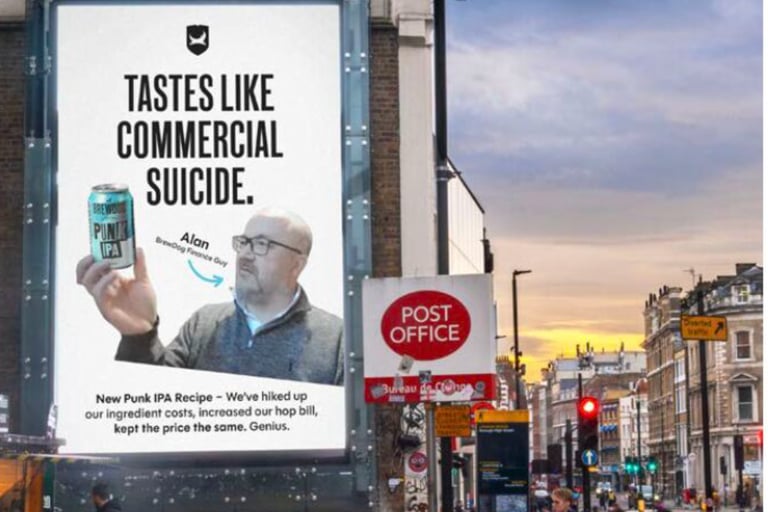
In recent weeks, craft beer brand BrewDog released a nationwide billboard campaign for its newly refreshed Punk IPA using the tagline “tastes like commercial suicide.” The phrase prompted widespread criticism from mental health charities and campaigners, who argued that using a term associated with real harm as a marketing hook was insensitive and potentially harmful.
Following that backlash, BrewDog removed the advertisements, acknowledging the concerns raised by the public and advocacy organisations. As reported by STV News, campaigners including Scottish Action for Mental Health emphasised that “suicide is not a punchline” and urged greater responsibility in public-facing language.
Suicide Is Not Just Another Metaphor
Phrases such as “commercial suicide” or “career suicide” are often defended as harmless figures of speech common metaphors, disconnected from mental health.
But metaphors only work because of what they reference. Their emotional force comes from real-world meaning. Suicide is a specific cause of death, a serious public health issue, and something that affects millions of people directly and indirectly.
That is why suicide prevention charities such as CALM (Campaign Against Living Miserably) have repeatedly stated that suicide should not be used casually, jokingly, or for shock value in advertising and media. When high-profile campaigns do so, these organisations consistently explain how such language undermines efforts to reduce stigma and encourage openness.
This isn’t fringe sensitivity. It’s established guidance from those working daily with people at risk.
Accessibility Includes Psychological and Emotional Safety
Accessibility is often framed around access: can someone see the content, hear it, read it? Inclusive practice also asks a different question: how does this content land?
Social media content appears in feeds without warning. People don’t opt into tone or subject matter in the way they might with a film, book, or live performance. For someone who has experienced suicidal ideation, bereavement, or severe mental distress, encountering suicide framed as a joke or marketing hook can be jarring or distressing.
Inclusive language considers emotional and psychological safety alongside technical access. It recognises that people bring their lived experiences with them when they scroll.
Critique Is Not “Policing Language”
When language choices are questioned, criticism is often reframed as “policing,” “censorship,” or being “too woke.”
But critique is not control.
No one is stopping brands or individuals from using particular words. The question is whether those choices are thoughtful, responsible, and aligned with the values brands claim to hold. In marketing, language is constantly reviewed, refined, and tested for impact. Inclusive language is simply an extension of that process.
It’s also worth noting that when brands themselves choose to remove or apologise for language after feedback as has happened in high-profile cases it demonstrates reflection and accountability, not coercion. These are business decisions informed by impact.
Not All Language Lands the Same and That’s Okay
Language evolves. Some phrases remain common; others fall out of favour as awareness grows. Many people already choose not to use terms like “crazy,” “insane,” or violent metaphors because they recognise that words can land differently for different audiences.
That choice isn’t enforced. It’s intentional.
The same applies in marketing. Brands make decisions about tone, humour, and provocation all the time. Inclusive practice simply asks that those decisions are made with awareness not indifference.
Inclusive Language Is a Strategic Advantage
Thoughtful language does not dilute campaigns. In many cases, it strengthens them.
Brands that take inclusive language seriously benefit from:
Greater audience trust and credibility
Reduced reputational risk
Stronger alignment between stated values and public behaviour
More creative campaigns that don’t rely on shock value
Bold marketing doesn’t have to punch down or lean on trauma to feel impactful. The strongest campaigns challenge ideas, norms, or industries not people’s lived experiences.
Practical Steps for More Inclusive Social Media Language
Inclusive language doesn’t require perfection. It requires intention.
At Access Bliss, we encourage brands to:
Audit language alongside visual accessibility
Question metaphors that reference death, illness, or disability
Ask “who might this land on?” rather than “did we mean harm?”
Listen to lived experience and expert guidance
Build language checks into content workflows, not as an afterthought
These steps don’t limit creativity they sharpen it.
Thoughtfulness Is Not a Flaw
Being careful with language is often dismissed as being overly sensitive. In reality, it reflects maturity, awareness, and responsibility — especially in spaces as influential as social media.
Marketing shapes culture. Social media shapes norms. Words matter whether we acknowledge them or not.
Digital accessibility isn’t just about what people can see or hear. It’s also about what they’re asked to carry.